Many older dogs have never had their teeth brushed, and plenty flat-out refuse when you try. If that sounds familiar, take heart: it is genuinely never too late to start, and you do not need a perfect, full-mouth session for brushing to help. Short, calm sessions with the right tools make a real difference to a senior dog's comfort and breath.
This guide explains why dental care matters more with age, when to see a vet first, and how to introduce brushing slowly to a dog who currently hates it, including why a three-sided brush makes the whole job easier.
Why Dental Care Matters More for Senior Dogs
Plaque builds up on teeth every day. If it is not removed, it hardens into tartar, irritates the gums, and can lead to red, swollen or bleeding gums and, over time, more serious dental disease. Because problems accumulate slowly, they are most often noticed in middle-aged and older dogs.
Signs that may point to dental discomfort include:
- Bad breath that does not fade
- Red, swollen or receding gums
- Yellow-brown crust along the gumline
- Eating more slowly, dropping food, or chewing on one side
- Pawing at the mouth or pulling away when the face is touched
Regular home brushing slows plaque before it turns into tartar, and it gives you a regular chance to spot changes early. Brushing supports dental health, but it does not remove existing hard tartar or treat disease, which is why a vet visit comes first.
Step 1: Book a Vet Check Before You Begin
If your dog is older and has never had dental care, start with a vet examination. Heavy tartar, sore or loose teeth, or infected gums need professional treatment, and brushing over them can be painful. Your vet can tell you whether a professional cleaning is needed before home brushing and show you where to focus.
Once your vet confirms brushing is safe, build the routine at home over one or two weeks. Never force the mouth open or pin a struggling dog, as that only creates fear.
Step 2: Introduce the Feeling Gradually
The goal in week one is simply to have your dog comfortable with something touching his teeth and gums. Work when he is relaxed, perhaps after a walk, and keep every session to a few seconds, followed by praise and a small treat.
1. Finger first. Rub a clean finger along the outside of the teeth and gums for a second or two, then reward.
2. Add a flavour. Put a tiny dot of dog-safe toothpaste on your finger so the experience tastes good.
3. Move to gauze or a soft brush. Wrap gauze around your finger, or switch to a soft brush, once he is relaxed with the finger.
Only the outer surfaces of the teeth need regular brushing, the side facing the cheek, since the tongue helps clean the inside. Focus on the large canine teeth and the back cheek teeth, where plaque collects most.
Step 3: Always Use Dog-Safe Toothpaste
Never use human toothpaste for a dog. Human products often contain fluoride and may contain xylitol, an artificial sweetener that is toxic to dogs, and dogs swallow the paste rather than spitting it out. Dog toothpaste is formulated to be swallowed and comes in flavours such as poultry, peanut and malt, which makes brushing far easier.
You only need a thin smear, not a long stripe like the toothpaste adverts show.
Step 4: Use a Brush That Makes the Job Faster
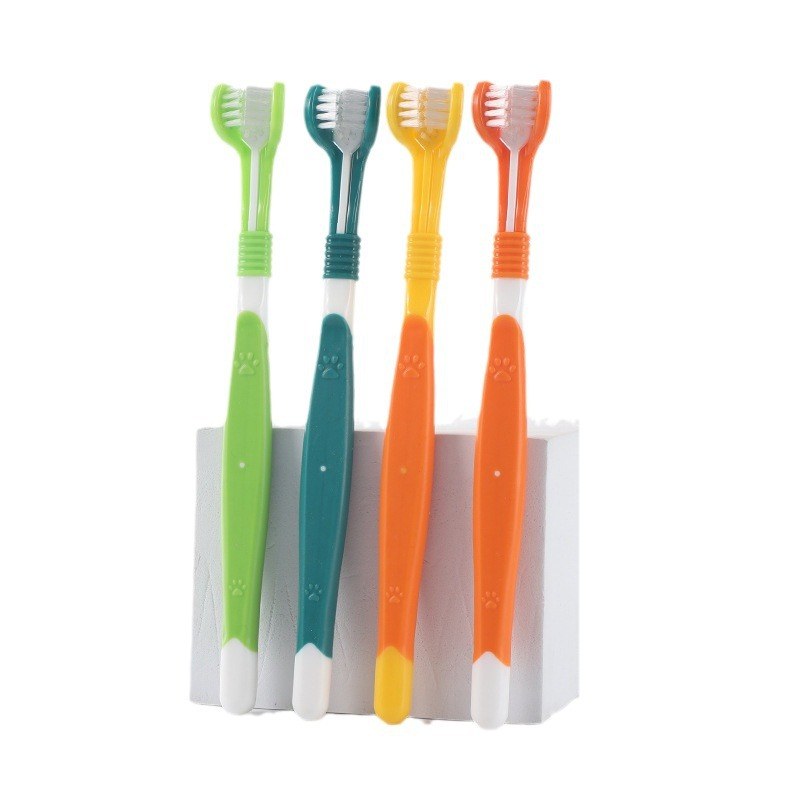
The hardest part of brushing a reluctant dog is reaching every surface before he loses patience. A [three-sided dog toothbrush](/products/three-sided-dog-toothbrush) wraps the top and both sides of each tooth, so one gentle stroke cleans three surfaces at once. Instead of wrestling with awkward angles to reach the back teeth, you simply run the brush along the cheek side and the angled head does the turning for you.
Look for soft, rounded nylon bristles that are gentle on older gums, and a long handle that keeps your hand clear of the mouth. Because a three-sided brush covers more in each pass, sessions stay short, which is exactly what a fussy senior dog needs.
A quick routine might look like this:
- Let him lick a little paste off the brush
- Gently lift one side of the lip
- Make three or four slow strokes along the cheek teeth
- Praise and treat, then stop
Aim to build up to daily brushing; if that is not realistic, several times a week is still far better than none.
If Your Dog Still Will Not Be Brushed
Some older dogs never accept a brush, and that is okay. Speak to your vet about options such as dental chews, prescription dental diets or water additives, and choose based on your dog's teeth and overall health, especially if he has kidney disease or a sensitive stomach. Pair these with the most brushing you can manage rather than using them as a full replacement.
You can also make the mouth a less sensitive area by handling the lips and muzzle calmly during petting, well away from any brushing attempt, so touch around the face stops feeling like a threat.
Frequently Asked Questions
My senior dog has never had his teeth brushed. Is it too late?
No. Start with a vet check to deal with any existing tartar or sore teeth, then introduce brushing very slowly. Even short, occasional sessions help slow new plaque and let you monitor the mouth.
Can I just use my own toothpaste?
No. Human toothpaste is meant to be spat out and may contain fluoride or xylitol, which is toxic to dogs. Always use a toothpaste made for dogs.
How often should I brush an older dog's teeth?
Daily is ideal, but a few times a week still provides real benefit. Short, calm sessions that your dog tolerates beat long ones he dreads.
Does a three-sided toothbrush really help with a fussy dog?
It cleans the top and both sides of a tooth in one stroke, so you cover more before your dog loses patience and you avoid awkward twisting to reach the back teeth. Soft bristles and a quick routine make it well suited to seniors.
The Bottom Line
Brushing a senior dog's teeth works best when you go at his pace: a vet check first, gradual desensitising, dog-safe toothpaste, and a brush that cleans efficiently so sessions stay short. It is one of the simplest ways to keep an older dog comfortable and to catch problems while they are small.
For a wider at-home routine that also covers paws and bathing, see our [senior dog home grooming guide](/blog/senior-dog-home-grooming-paws-teeth-bath-routine).