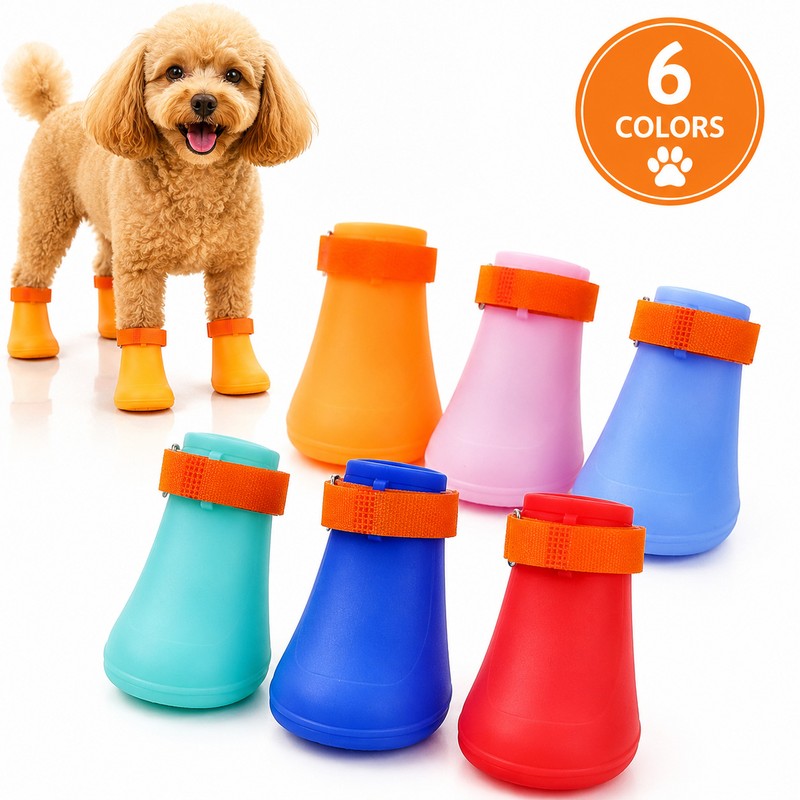
Rainy-season walks don't have to mean muddy paw prints across your clean floors, damp dog feet on the furniture, or cut-short outings because your pup keeps lifting their paws off cold, wet pavement. A good pair of waterproof dog rain boots solves all of those problems at once — and the benefits go well beyond keeping your home clean.
Whether you're a first-time boot buyer or you've tried rigid plastic boots that your dog hated, this guide covers everything you need to know: why paw protection matters in wet weather, how silicone compares to other materials, how to find the right size, and how to get your dog comfortable wearing boots for the first time.
Why Dogs Need Rain Boots
Dogs need rain boots because wet weather exposes their paws to more than just water — cold surfaces, muddy terrain, sidewalk chemicals, and slippery ground all make outdoor walks less comfortable and more hazardous.
Many first-time owners assume a dog's paw pads are tough enough for any condition. It's true that paw pads are thicker than regular skin, but they're not armor. The American Veterinary Medical Association (AVMA) notes that icy crust on snow can cause cuts and abrasions to a dog's paws, and de-icing chemicals can lead to dry, cracked, or sensitive pads. The ASPCA similarly recommends booties to reduce contact with salt crystals and chemical ice-melting agents during winter walks.
Rain boots provide year-round value beyond the winter months:
- Rain and puddles: A waterproof barrier keeps paws completely dry instead of soggy for the rest of the walk.
- Mud and dirt: Boots contain the mess so your dog's feet stay clean — and so do your floors, car seats, and furniture.
- Hot pavement in summer: The same thick sole that insulates against cold also shields pads from sun-heated asphalt.
- Slippery surfaces: Textured tread gives dogs better grip on wet tile, hardwood floors, and slick sidewalks.
- Beach and outdoor trips: Sand, sharp shells, and rocky trails stay outside the boot instead of between your dog's toes.
- Sensitive paws: Dogs with delicate or easily bothered paw pads benefit from a soft, cushioned layer between their feet and the ground.
Think of dog rain boots like your own shoes — you wouldn't walk through a downpour barefoot, and neither should your dog.
Silicone vs. Other Boot Materials
Silicone is the best all-around material for dog rain boots because it is naturally waterproof, flexible, lightweight, easy to clean, and free of the harsh stiffness that makes dogs reject plastic or rubber boots.
Not all dog boots are created equal. The material determines how waterproof they are, how comfortable they feel, how long they last, and how easily they clean up after a messy walk. Here's how the most common options compare.
| Material | Waterproof | Flexibility | Weight | Comfort | Ease of Cleaning | Best For |
|---|---|---|---|---|---|---|
| Food-grade silicone | 100% | Very high — flexes with every step | Ultra-light | Soft, moves naturally with the paw | Rinse clean in seconds | Rain, mud, snow, everyday walks |
| Rigid plastic | Yes | None | Lightweight | Stiff; can rub or alter gait | Easy but cracks over time | Short-term, occasional use |
| Thick rubber | Yes | Low | Heavy | Bulky; some dogs overheat | Rinse clean, but retains odor | Heavy-duty winter/ice |
| Neoprene/fabric | Water-resistant, not fully waterproof | Moderate | Medium | Soft and breathable | Machine wash, slow to dry | Mild weather, indoor traction |
| Latex | Yes | Moderate | Lightweight | Can trap moisture against skin | Wipe clean | Short outings only |
Why Silicone Stands Out
Silicone is a synthetic polymer made from silicon, oxygen, and other elements. In its food-grade form, it is non-toxic, heat-resistant, and naturally non-porous — meaning water, mud, and bacteria cannot penetrate the surface.
The LoyalBond Waterproof Silicone Dog Rain Boots are made from premium food-grade silicone that offers four key advantages:
1. Complete waterproofing: Unlike fabric or neoprene boots that absorb water, silicone forms an impermeable seal. Paws stay dry from the first step to the last.
2. Natural flexibility: Silicone bends and stretches with your dog's foot as they walk, run, and play. There's no break-in period and no stiff edges digging into the ankle.
3. All-weather durability: The same material withstands summer heat and winter cold without cracking, hardening, or becoming brittle.
4. Hassle-free cleaning: Muddy boots? Rinse them under the tap, shake off the water, and they're ready for the next walk. No scrubbing, no machine washing, no waiting for fabric to dry.
PetMD recommends lightweight, easy on-and-off boots with good traction — a description that fits silicone boots perfectly for wet weather year-round.
How to Choose the Right Dog Rain Boots
The right dog rain boots should fit snugly without being tight, have a non-slip sole for traction, use a secure closure that stays on, and be made from a material your dog finds comfortable enough to wear for a full walk.
Here are the five factors that matter most.
1. Correct Size
A boot that is too loose will slip off or twist around the paw. A boot that is too tight can rub, restrict circulation, and make walking uncomfortable. Most quality boot lines size by body weight rather than paw width, because weight correlates closely with overall paw size across breeds.
The LoyalBond silicone rain boots come in five sizes:
| Size | Weight Range | Best For |
|---|---|---|
| XS | 1.5–5.5 kg (3–11 lb) | Teacup breeds, tiny puppies, Chihuahuas, Yorkies |
| S | 5–7.5 kg (10–15 lb) | Maltese, Pomeranians, Shih Tzus, Miniature Pinschers |
| M | 7.5–11.5 kg (15–23 lb) | French Bulldogs, Cavalier King Charles Spaniels, Miniature Schnauzers |
| L | 11.5–18 kg (23–36 lb) | Beagles, Cocker Spaniels, Border Collies, Corgis |
| XL | 18–25 kg (36–50 lb) | Dalmatians, Boxers, Huskies, Labrador Retrievers |
If your dog is between sizes, choose the larger size — a slightly roomy boot is safer than a tight one, and you can tighten the adjustable strap.
2. Non-Slip Sole
Wet pavement, tile entryways, and hardwood floors are the most common places dogs slip. Look for a boot with a textured tread pattern on the sole. The LoyalBond boots feature a paw-print textured tread that channels water away and grips slick surfaces, helping your dog maintain confident footing in rain and on smooth indoor floors.
3. Secure Closure
The closure is what keeps the boot on during active walking. Hook-and-loop (Velcro-style) straps are the most reliable option because they are fully adjustable and quick to fasten and release. Avoid boots with simple elastic cuffs — these work their way loose as the dog moves. Each LoyalBond boot has an adjustable hook-and-loop strap at the top opening that holds the boot firmly in place.
4. Material Comfort
If your dog finds the boots uncomfortable, they won't wear them — no matter how waterproof they are. Soft, flexible silicone is far more likely to be accepted than rigid plastic or heavy rubber. The material should flex when you bend it by hand. If it doesn't bend easily in your fingers, it won't bend easily on your dog's foot.
5. Reflective or Visible Details (Bonus)
While not essential, bright colors or reflective accents make it easier to spot your dog in low-visibility rain and add a layer of safety during early-morning or evening walks. The LoyalBond boots are available in six vibrant colors — Dark Blue, Light Blue, Red, Orange, Light Pink, and Light Green — so you can choose a shade that's both stylish and easy to see.
Getting Your Dog Used to Wearing Boots
Most dogs accept rain boots within a few short sessions if you introduce them gradually with positive reinforcement, rather than strapping all four boots on and heading outside immediately.
Wearing boots feels strange to dogs at first, since they rely on paw feedback. Expect some high-stepping or comical walking initially. Follow these steps for a smooth transition.
Step 1: Let Them Sniff
Place the boots on the floor and let your dog investigate them at their own pace. Offer treats and praise when they show interest. This builds a positive association before the boots ever touch their paws.
Step 2: Start with One Boot
Put just one boot on a front paw. Fasten the strap snugly but not tightly. Immediately give a treat and engage your dog in a fun activity — a game of tug, a short training session, or their favorite trick. Distraction is your best friend here.
Step 3: Add More Boots Gradually
After your dog seems comfortable with one boot, add a second, then a third, then all four. Spread this over several short sessions rather than doing it all at once. Keep each session to 5–10 minutes initially.
Step 4: Practice Indoors First
Let your dog walk around the house wearing all four boots for 10–15 minutes at a time. This lets them get used to the sensation on familiar ground before adding the distractions of the outdoors. Reward calm, natural walking.
Step 5: Take a Short Outdoor Walk
Start with a 5–10 minute walk around the block on a dry day if possible. Bring treats and keep the mood upbeat. Most dogs stop noticing the boots within a few minutes of exploring outdoors.
Step 6: Check the Fit After Each Walk
After the walk, remove the boots and inspect your dog's paws. Look for any redness or rub marks. If you see consistent redness or discomfort, the boots may be too tight or the wrong size. The strap should leave no deep indentation when removed.
Most dogs fully adjust to wearing boots within 3–7 short sessions. After that, many dogs get excited when they see the boots because they associate them with going outside.
Caring for Silicone Dog Boots
Silicone dog boots are among the easiest pet accessories to maintain: rinse them under running water after each use, inspect them periodically for wear, and store them in a cool, dry place away from direct sunlight.
After Every Walk
1. Remove the boots at the door before your dog tracks anything inside.
2. Turn each boot upside down and tap out any trapped water, sand, or debris.
3. Rinse under running water to wash away mud and dirt.
4. Pat dry with a towel or leave them upright to air dry completely before the next use. For quick paw cleanup after muddy walks, pair with our pet paw cleaner cup.
Weekly Check
Once a week, inspect the boots for:
- Sole wear: If the tread pattern is worn smooth, it's time for a new set.
- Strap condition: Make sure the hook-and-loop fastener still grips firmly and isn't clogged with fur or dirt.
- Cracks or tears: Check the upper portion, especially around the strap attachment point.
- Odor: Silicone is naturally odor-resistant, but if a smell develops, soak the boots in a mixture of warm water and mild pet-safe soap for 10 minutes, then rinse well.
Storage
Store boots in a cool, dry spot out of direct sunlight, as UV exposure can gradually degrade silicone. A shelf or organizer near the door works well.
With basic care, a set of silicone rain boots can last through multiple seasons of regular use.
Frequently Asked Questions
Can dogs wear rain boots all day?
Dogs should not wear rain boots all day. Boots are designed for walks and outdoor activities, not for continuous indoor wear. Prolonged use can trap warmth and moisture against the paws, leading to discomfort. Most experts recommend removing boots once you return home and drying your dog's paws thoroughly. For a typical 30–60 minute walk in wet weather, boots are perfectly comfortable and safe.
How do I know what size rain boots my dog needs?
Size your dog's rain boots by their body weight, as most silicone boot lines use weight-based sizing. Weigh your dog on a pet scale or at your vet's office, then match their weight to the manufacturer's size chart. For the LoyalBond boots, XS fits 3–11 lb, S fits 10–15 lb, M fits 15–23 lb, L fits 23–36 lb, and XL fits 36–50 lb. If your dog is between sizes, go up a size and use the adjustable strap for a snug fit.
Are silicone boots safe for dogs?
Yes, food-grade silicone boots are safe for dogs. Premium food-grade silicone is non-toxic, BPA-free, and does not leach chemicals. It is soft enough to flex with your dog's natural movement yet durable enough to withstand rain, mud, snow, and rough terrain. The ASPCA confirms that booties provide effective coverage against salt, sand, and chemical residues on walks. Always choose boots labeled as food-grade or pet-safe silicone, and inspect them regularly for damage.
Will rain boots make my dog's paws sweat?
Silicone is non-porous and does not breathe the way fabric does, so some warmth inside the boot is normal during active walking. This is generally not a problem for the duration of a typical walk in cool or mild weather. To keep paws comfortable, remove the boots promptly when you get home, dry the paws with a towel, and avoid using boots on very hot days for extended periods. In summer, schedule walks during cooler morning or evening hours.
How tight should dog rain boots be?
Dog rain boots should fit snugly enough that they don't twist or slip off during walking, but not so tight that they compress the paw or restrict movement. You should be able to slide one finger between the strap and your dog's leg. When you remove the boot, the strap area should not show deep indentations or red marks. If your dog's toes are splayed or curled inside the boot, the size is too small.
Can my dog wear rain boots in snow?
Yes, waterproof silicone dog boots work well in snow, slush, and light winter conditions. The waterproof barrier keeps paws dry and the non-slip sole provides grip on packed snow and icy patches. The AVMA notes that booties reduce the risk of paw irritation from ice and de-icing chemicals. For extreme cold below -10°C (14°F) or extended winter hikes, consider pairing silicone boots with a paw balm for additional comfort, and keep walks shorter than usual.
Final Thoughts
Waterproof dog rain boots are one of the most practical accessories you can own as a dog owner. They keep paws dry, clean, and comfortable across rain, mud, snow, beach trips, and messy trails — and they save your floors and furniture from the aftermath. Silicone stands out as the best material because it is fully waterproof, naturally flexible, feather-light, and rinses clean in seconds.
The LoyalBond Waterproof Silicone Dog Rain Boots are designed to check every box:
- Premium food-grade silicone that is 100% waterproof and pet-safe
- Non-slip paw-print sole for confident grip on wet and slippery surfaces
- Adjustable hook-and-loop strap for a secure, stay-on fit
- Five sizes from XS to XL, fitting dogs from 3 to 50 pounds
- Six vibrant colors to match every dog's personality
- Ultra-lightweight at just 200 grams per set of four
- Easy rinse-clean maintenance for everyday use
Give your dog the comfort and protection they deserve on every wet-weather adventure. Explore the Waterproof Silicone Dog Rain Boots in our Travel & Car Collection and find the perfect size and color for your pup — because no dog should have to sit out a walk just because it's raining.
Sources: American Veterinary Medical Association (AVMA) cold weather pet safety guidelines; ASPCA cold weather safety tips and de-icer guidance; PetMD winter paw protection recommendations.