When your senior dog starts struggling with mobility, a lifting harness often becomes the most important tool in your caregiving arsenal. But with different types available, choosing the right one can feel overwhelming. Do you need a full-body lift-assist harness, or is a targeted hind leg support harness the better choice? This guide breaks down the key differences, ideal use cases, and everything you need to know to make an informed decision.
Why Senior Dogs Need Lifting Harnesses
As dogs age, muscle loss, joint stiffness, and general weakness can make everyday movements challenging. Tasks that were once effortless — standing up from a nap, climbing stairs, getting into the car — suddenly require significant effort and may become impossible without assistance.
A lifting harness provides a safe, ergonomic way for you to help your dog with these movements. Instead of awkwardly grabbing under your dog's belly or trying to lift them by their collar (which can cause injury), a properly designed harness distributes weight across a wide area and gives you a secure handle to hold. This protects both you and your dog from strain and injury.
Beyond physical benefits, lifting harnesses provide psychological support. Dogs who struggle with mobility often become anxious and lose confidence. Knowing they have stable support when they need it helps them remain calm and willing to attempt movements they might otherwise avoid.
Understanding the Two Main Types
The market generally offers two categories of lifting harnesses for senior dogs: full-body lift-assist harnesses and targeted hind leg support harnesses. While they serve similar purposes, their designs and ideal applications differ significantly.
Lift-Assist Harness (Mesh Support Sling): Full-Body Support
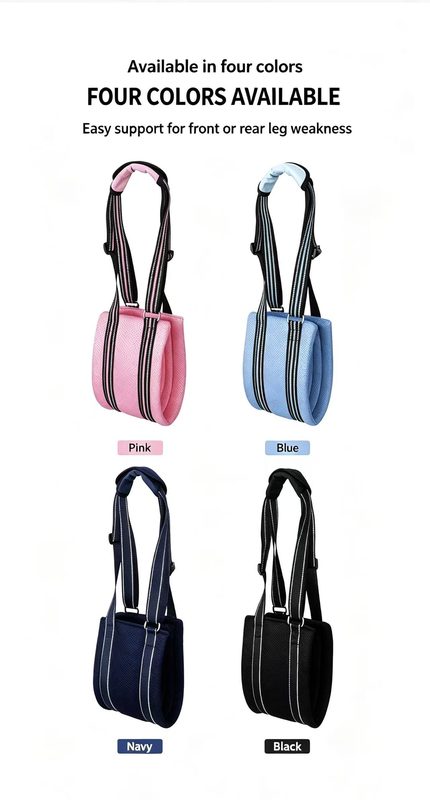
The LoyalBond Mesh Support Sling provides comprehensive support for dogs who need help with both front and hind legs. The wide wrap-around panel distributes weight evenly across the chest and belly, preventing pressure points during extended use.
Key features include lightweight, breathable hollow mesh fabric that promotes air circulation — crucial for dogs who need daily support. Multiple layers of reinforced stitching on the webbing handles ensure stable load bearing for medium and large senior dogs. The extended padded handle keeps your body upright while lifting, reducing strain on your own back.
The dual-side support design works for both front and hind leg weakness, making it versatile for dogs whose needs change over time. Reflective stitching provides better visibility in low light, and the harness is machine washable with a storage bag included. Available in sizes S through XL. Price range: $5.00–$8.50.
Hind Leg Support Harness: Targeted Rear-End Assistance
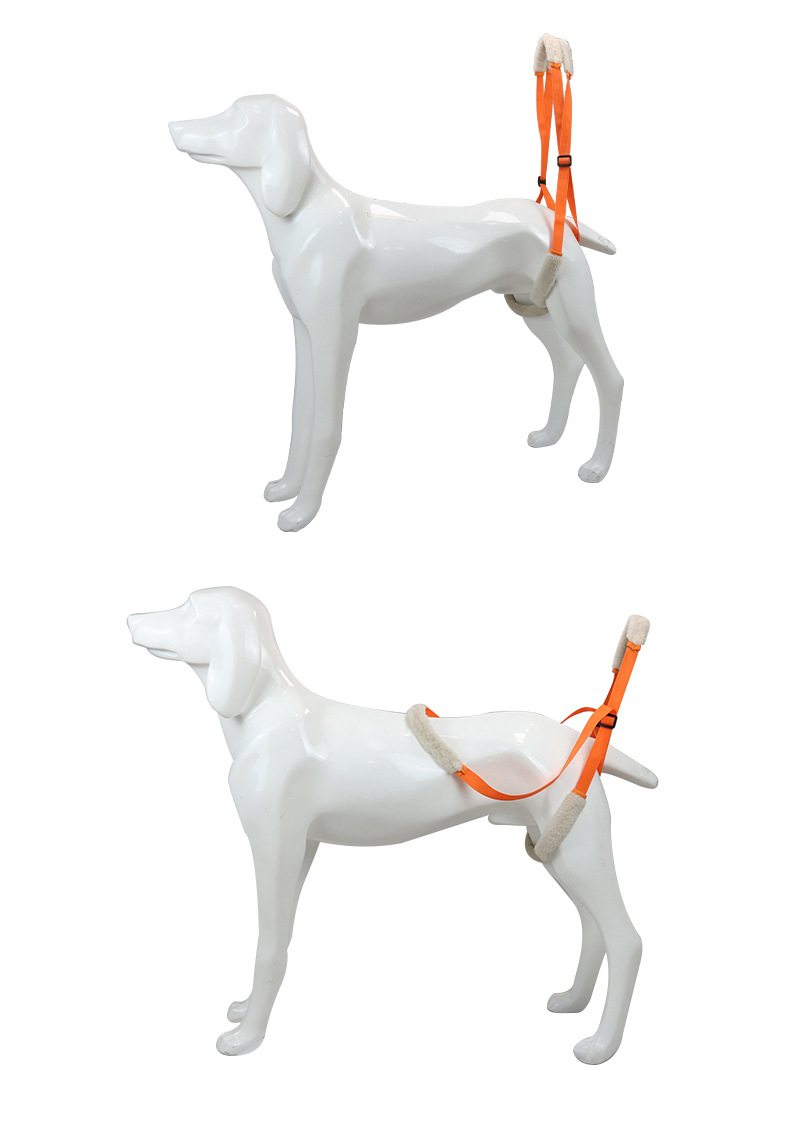
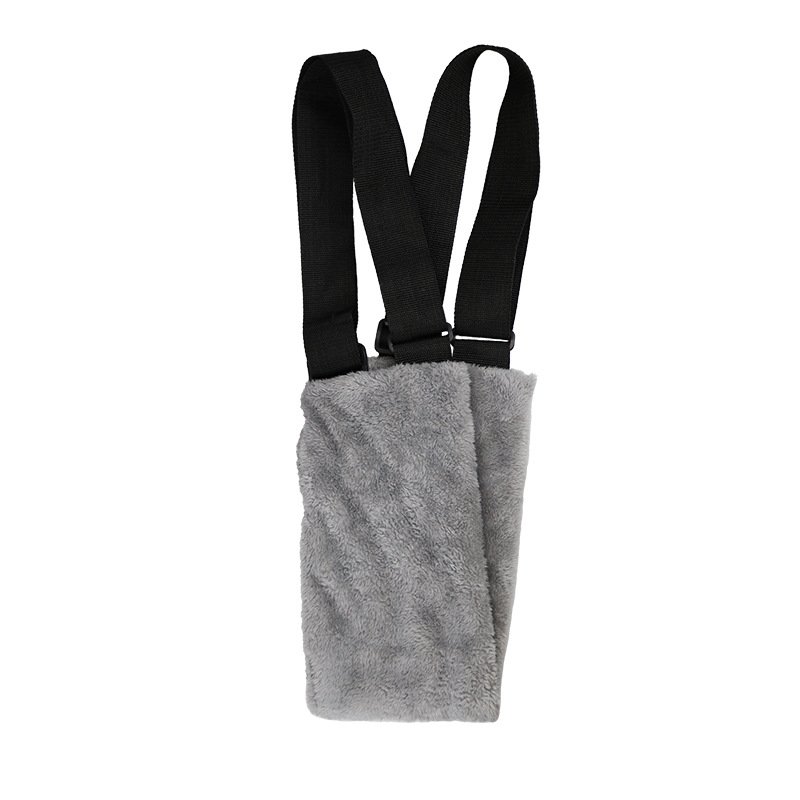
The LoyalBond Senior Dog Hind Leg Support Harness is specifically designed for dogs whose mobility challenges are primarily in the back legs. This is a very common scenario, as many age-related conditions — degenerative myelopathy, hip dysplasia, general hind quarter weakness — primarily affect the rear end first.
The focused design uses an ergonomic mesh panel that wraps comfortably around the lower torso and upper hind legs. Two precisely sized leg openings ensure a secure, natural fit without restricting movement or interfering with natural bodily functions. The breathable mesh fabric promotes continuous air circulation, making it suitable for warm weather and extended daily wear.
One standout advantage is the ultra-lightweight construction — just 68-76 grams depending on size. For dogs with low stamina, every gram matters. The quick-release buckle closure makes it easy to put on and take off in seconds. Available in four sizes: S (Waist 11"–14"), M (Waist 14"–18"), L (Waist 17"–21"), XL (Waist 19"–24"). Price range: $3.50–$5.00.
Portable Hind Leg Support Belt: The Lightweight On-the-Go Option
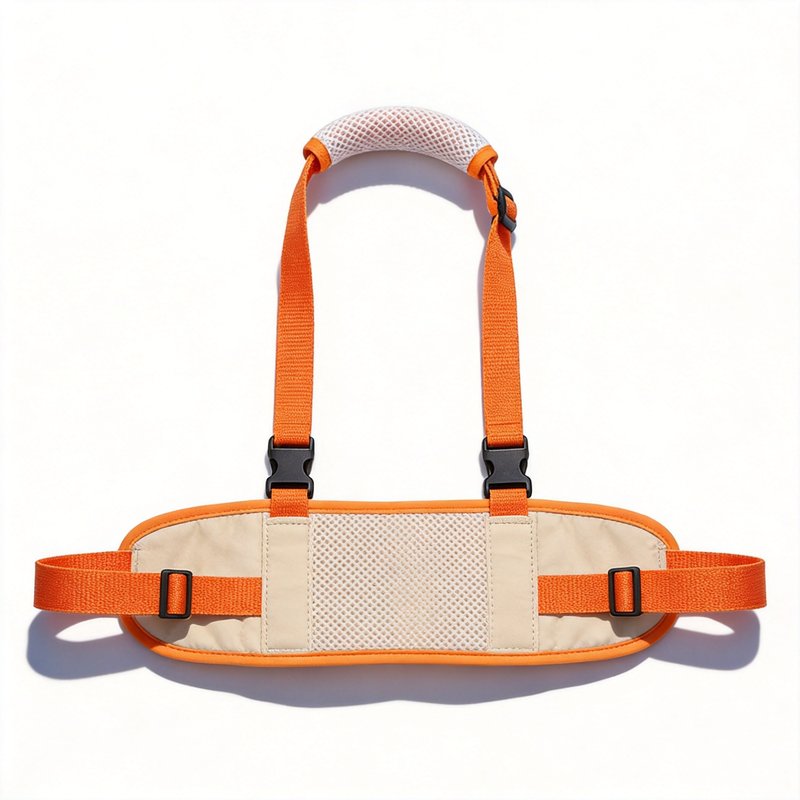
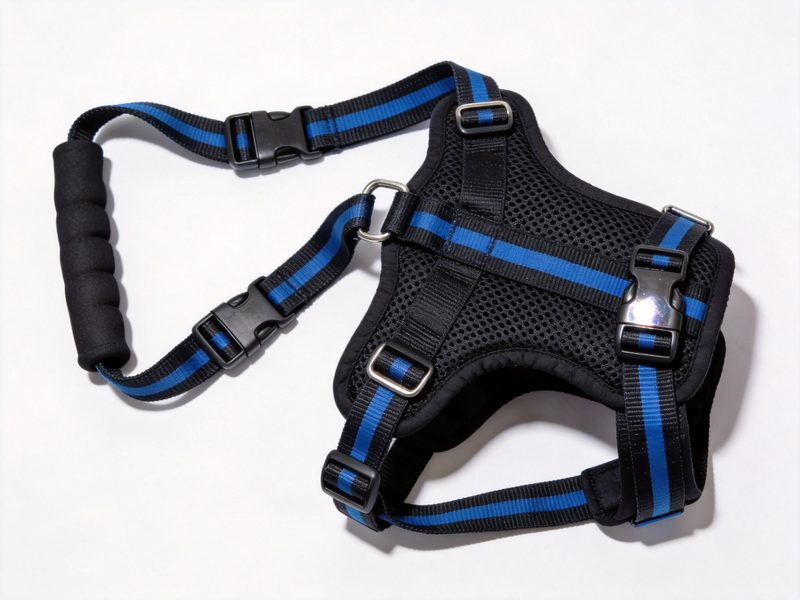
There is a third style worth considering if you mostly help your dog outside the home. The LoyalBond Portable Hind Leg Support Belt is a compact lift strap built for quick, targeted assistance rather than extended wear. A soft, breathable mesh panel rests under the belly, while a padded handle lets you take some weight off the back legs in an instant.
Because it folds flat and tucks easily into a bag, it is ideal for car transfers, stairs, vet visits, and short outdoor breaks where a full harness would be cumbersome. Bright, adjustable webbing with heavy-duty quick-release buckles makes it fast to fit at both the waist and support straps. If you already own a full harness for use at home, this belt is an excellent lightweight companion to carry on the go.
Key Differences Compared
Coverage Area
The lift-assist harness covers both the chest and belly area, supporting both front and hind legs. The hind leg harness focuses exclusively on the rear quarters, wrapping around the lower torso and upper hind legs.
Weight and Bulk
The hind leg harness is significantly lighter and less bulky — important for dogs who are sensitive to wearing anything or have low stamina. The lift-assist harness, while still lightweight, naturally has more material due to broader coverage.
Versatility vs Specialization
The lift-assist harness handles a wider range of mobility challenges and adapts as needs change. The hind leg harness is more specialized but excels in its specific application with less material and weight.
Ease of Use
Both feature quick-release closures, but the hind leg harness is often simpler to put on because it covers a smaller area. The lift-assist harness may require more adjustment for proper fit across both front and back.
Price Point
The lift-assist harness ($5.00–$8.50) is priced higher than the hind leg harness ($3.50–$5.00) due to additional material and more complex construction. Both represent excellent value for the support they provide.
How to Choose the Right Harness
Assess Where Your Dog Needs Support
If your dog has weakness in both front and back legs, shows generalized difficulty standing or walking, or you are not sure where the problem is most pronounced, start with a lift-assist harness. Its versatility means you can use it effectively regardless of which legs need the most support.
If your dog's challenges are clearly in the hind legs — dragging back feet, difficulty positioning back legs, weakness when turning or on stairs — a hind leg support harness provides more focused assistance without extra material.
Consider Your Dog's Size and Strength
For large breed dogs, the lift-assist harness's wide panel is particularly beneficial because it spreads load across a bigger area. For small to medium dogs, the hind leg harness's lightweight construction is especially advantageous because these dogs benefit most from minimal added weight.
Think About Wear Duration
If your dog needs the harness on for extended periods throughout the day, breathability becomes critical. Both use breathable mesh, but the hind leg harness's more open design may provide slightly better air circulation in warm climates.
Consider Your Own Physical Capabilities
If you have back problems or limited strength, the ergonomic handle design matters enormously. The lift-assist harness's extended handle may be more comfortable if you are lifting a heavy dog repeatedly.
Think About Where You'll Use It Most
If the hardest moments happen away from home — getting into the car, climbing a few steps at a rental, or short breaks while traveling — a compact Portable Hind Leg Support Belt may be more practical than a bulkier harness. It folds flat, slips into a bag, and goes on in seconds, so many owners keep one in the car even when their dog wears a fuller harness at home.
Plan for Changing Needs
Many senior dogs' mobility needs progress over time. If you anticipate needs expanding, investing in a lift-assist harness now may save buying a second harness later. Alternatively, some owners start with a hind leg harness and add a lift-assist harness later — a staged approach that can be more cost-effective.
Using Your Harness Effectively
Proper Fit is Critical
Measure your dog carefully according to the manufacturer's size chart. The harness should be snug enough to provide support without restricting breathing or circulation. You should be able to fit two fingers comfortably between the harness and your dog's body.
Introduce the Harness Gradually
Start by letting your dog sniff and investigate it. Put it on loosely for short periods while offering treats and praise. Gradually increase wear time over several days until your dog is comfortable.
Practice in Safe Environments
Before using on stairs or in challenging situations, practice on flat ground where both you and your dog can build confidence. Learn how to hold the handle, how much support to provide, and how to communicate during assisted movements.
Use Consistent Commands
Pair harness use with consistent verbal cues. Commands like "up" for standing, "steady" for walking, and "easy" for stopping help your dog anticipate and cooperate with assisted movements.
Common Mistakes to Avoid
Using the harness as a substitute for all exercise: Your dog still needs regular gentle movement to maintain muscle mass and joint flexibility. Use the harness to enable walks, not replace them.
Neglecting to check fit regularly: Senior dogs may gain or lose weight. Check harness fit regularly and adjust as needed. An ill-fitting harness can cause chafing or fail to provide adequate support.
Forgetting to wash the harness: Follow the manufacturer's washing instructions. Both LoyalBond harnesses are machine washable — regular cleaning keeps them fresh and functional.
When to Consider Both Harness Types
Some dogs benefit from having both a lift-assist harness and a hind leg harness available. Use the hind leg harness for quick assistance during bathroom breaks or short walks, and the lift-assist harness for more challenging situations like stairs or car transfers. Having options lets you choose the most appropriate tool for each situation.
Conclusion
Choosing between a lift-assist harness and a hind leg support harness comes down to understanding your individual dog's needs. If your dog has generalized weakness or challenges in both front and back legs, the lift-assist harness offers versatility and comprehensive support. If challenges are primarily in the hind legs, the targeted hind leg harness provides focused assistance with minimal weight and bulk.
Both harness types are invaluable tools for maintaining your senior dog's mobility and quality of life. The right choice helps your dog stay active, confident, and comfortable while protecting your own body from strain.
At LoyalBond, both our Lift-Assist Harness and Hind Leg Support Harness are designed with real senior dog needs in mind, using breathable, non-toxic materials you can trust. Explore our Travel & Car Collection to find the perfect harness solution for your aging companion.