If you've ever watched your dog hunch over a bowl on the floor, straining their neck or scooping food at an awkward angle, you've already seen the problem elevated dog bowls are designed to solve. Raised feeders lift food and water off the ground, bringing the eating surface closer to your dog's mouth — but are they right for every dog?
In this guide, we'll break down the research on elevated feeding, who benefits most, how to choose the right height, and what to look for in a quality elevated bowl stand.
What Are Elevated Dog Bowls?
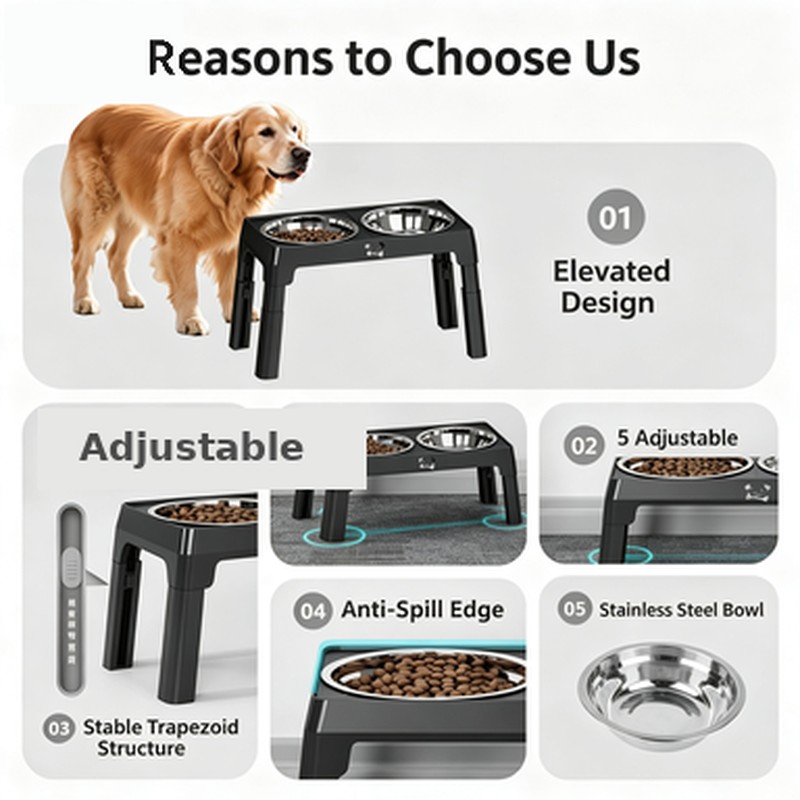
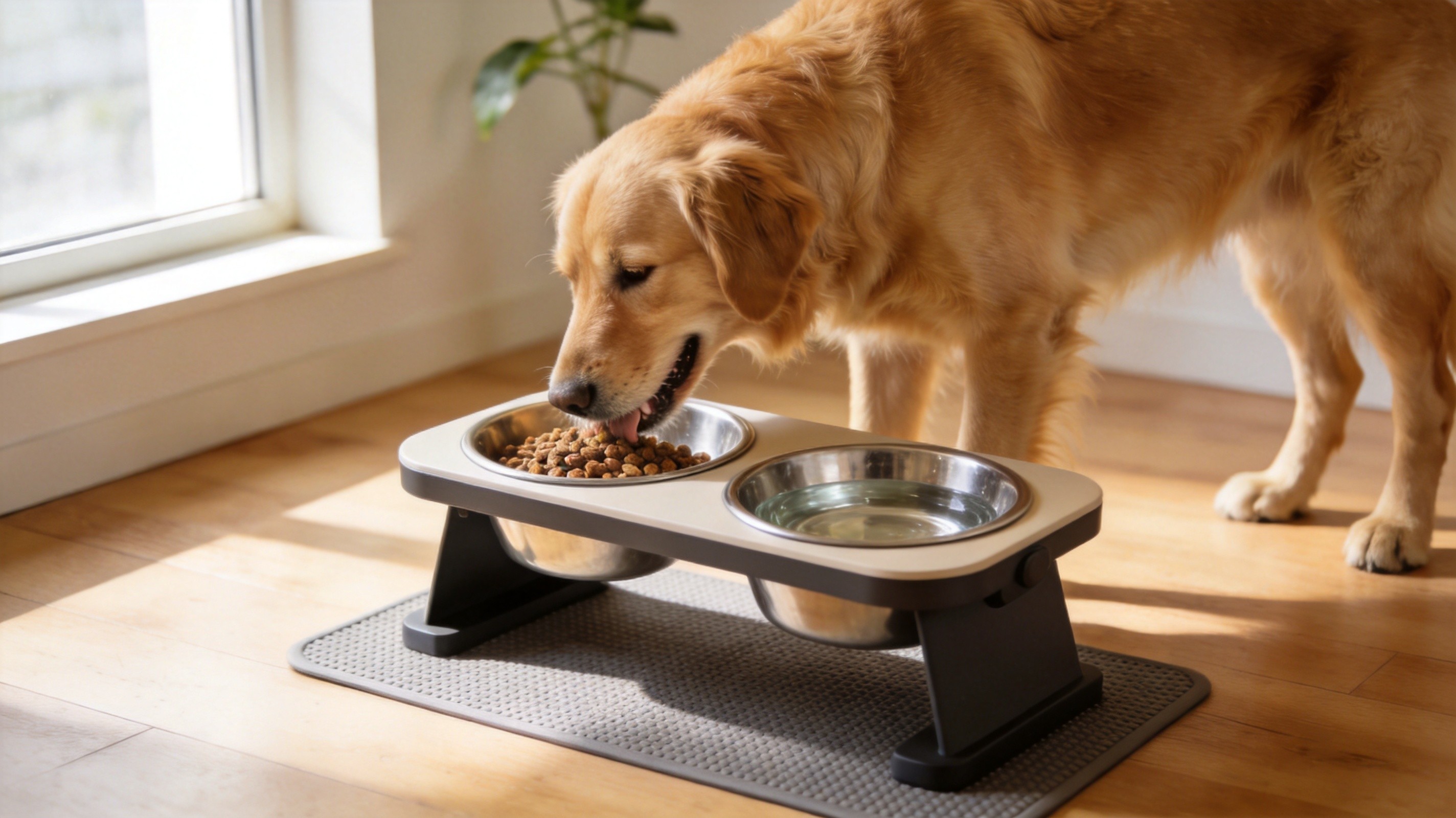
Elevated dog bowls (also called raised feeders or feeding stations) consist of a stand that holds one or two bowls at a height above the floor. They range from simple fixed-height plastic stands to adjustable models that grow with your puppy or adapt to different dogs in a multi-pet household.
The basic idea is simple: instead of your dog lowering their head all the way to the ground, the bowl meets them at a more natural, comfortable level.
Potential Benefits of Elevated Feeding
Better Posture and Joint Comfort
When a dog eats from a floor-level bowl, they must lower their neck, round their shoulders, and shift their weight forward. For young, flexible dogs this is no problem. But for senior dogs, dogs with arthritis, or dogs recovering from injury, this posture can be painful and discouraging.
An elevated bowl reduces the range of motion needed to reach food, which means:
- Less strain on the neck and spine
- Reduced pressure on front leg joints
- More comfortable eating for dogs with mobility issues
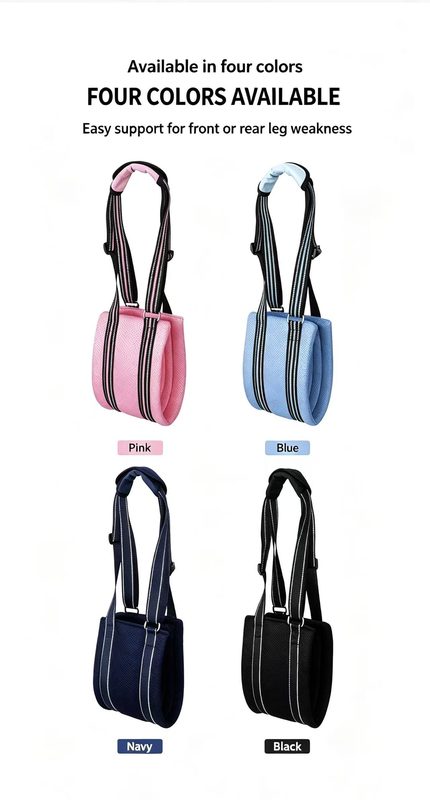
- Easier access for dogs using a lifting harness or support sling
Slower, More Comfortable Eating
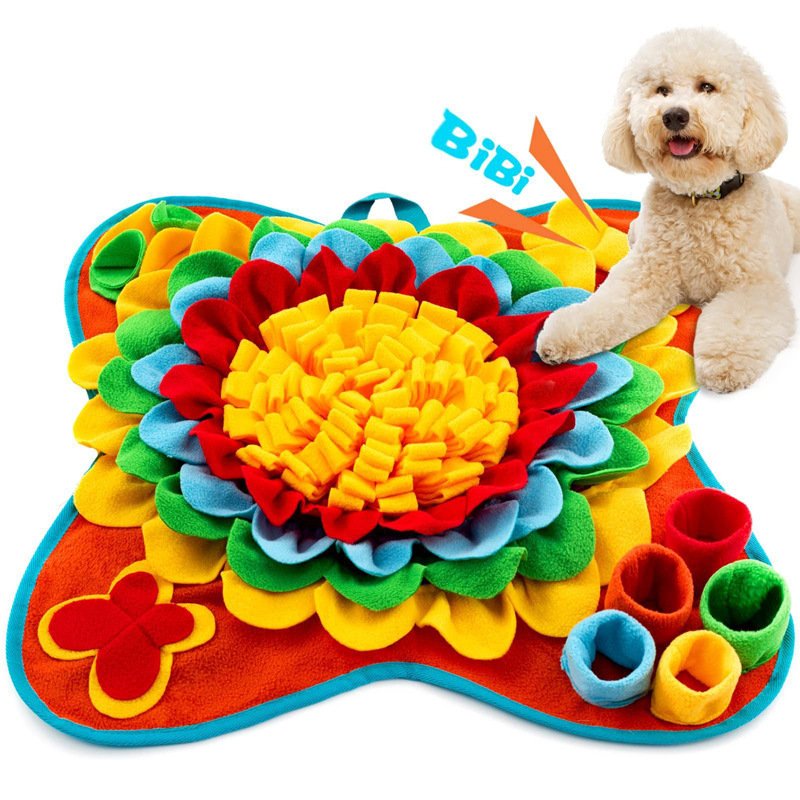
Some — though not all — dogs naturally eat more slowly from a raised bowl because the food is at a level where they can pick it up more deliberately rather than scooping frantically from the floor. Pairing an elevated stand with a slow feeder bowl amplifies this effect, giving dogs a double benefit: better posture plus slower, safer mealtime.
Cleaner Feeding Area
Raised bowls contain spills and splashes better than floor bowls. Water is less likely to be tracked across the floor, and kibble stays within the stand rather than scattering. This is especially helpful for messy drinkers, long-eared breeds like Cocker Spaniels and Basset Hounds, and households with hardwood or tile floors.
Easier for Pet Parents
If you have back problems or mobility issues yourself, bending to refill or clean floor bowls can be a daily struggle. Elevated feeders bring the bowls to a height that's easier to reach, refill, and wipe down.
What the Research Says
The topic of elevated bowls and bloat (gastric dilatation-volvulus, or GDV) has been debated for years. Early concerns that raised feeders might increase GDV risk were based on limited studies and have not been consistently supported. More recent veterinary consensus is nuanced:
- For large and giant breeds with deep chests, GDV risk is primarily driven by genetics, body conformation, eating speed, and exercise after meals — not bowl height alone.
- If your dog is a breed prone to GDV (Great Danes, Weimaraners, Standard Poodles, etc.), discuss feeding posture with your veterinarian rather than relying on bowl height as a single factor.
- For senior dogs, small breeds, and dogs with joint or neck pain, the comfort benefits of elevated feeding are well-established through clinical observation and owner reports.
The key takeaway: elevated bowls are not universally necessary, but they provide meaningful comfort and practical benefits for many dogs — especially older ones.
How to Choose the Right Height
Bowl height should match your dog's withers height — the distance from the floor to the top of the shoulder blade. As a starting point:
| Dog Size | Withers Height | Bowl Height |
|---|---|---|
| Toy/Small (<10 kg) | 15–25 cm | 5–10 cm |
| Medium (10–25 kg) | 25–40 cm | 10–15 cm |
| Large (25–40 kg) | 40–60 cm | 15–25 cm |
| Giant (40+ kg) | 60+ cm | 25–35 cm |
The goal is for your dog to eat with their neck in a neutral, relaxed position — not reaching up and not crouching down. A good rule: the top of the bowl should be roughly level with your dog's lower chest.
Adjustable stands are the most versatile choice because they let you fine-tune the height as your dog ages or if you have multiple dogs of different sizes.
Features to Look For
When shopping for an elevated feeder, consider these features:
- Adjustable height — grows with your puppy or adapts to changing needs
- Sturdy, non-slip base — prevents the stand from sliding during enthusiastic meals
- Removable, dishwasher-safe bowls — stainless steel or food-grade silicone is easiest to clean
- Slow feeder compatibility — a stand that works with a slow-feed insert helps prevent choking and bloating
- Foldable or collapsible design — useful for travel and easy storage
- Non-toxic materials — avoid stands with strong chemical odors or questionable plastics
Elevated Feeding for Senior Dogs: A Special Case
Senior dogs are the group that benefits most from elevated bowls. As dogs age, they commonly develop:
- Arthritis in the neck, shoulders, and elbows — making floor-level eating uncomfortable
- Reduced flexibility — stiffening joints make it harder to lower the head
- Spinal conditions — intervertebral disc disease and spondylosis make bending painful
- Muscle weakness — maintaining a crouched eating posture is tiring
- Medication schedules — many senior dogs need to eat with pills, and a comfortable feeding position makes this easier
If your senior dog has started leaving food in the bowl, eating less enthusiastically, or seeming stiff after meals, an elevated bowl — combined with an orthopedic bed nearby and a supportive harness for walks — can make a noticeable difference in their daily quality of life.
Our Pick: 5-Height Adjustable Elevated Dog Bowl
The 5-Height Adjustable Elevated Dog Bowl is designed to grow with your dog from puppyhood through their senior years. Five height settings — from 7 cm to 25 cm — cover every dog from a Chihuahua to a Golden Retriever. The stand folds flat for storage or travel, and the included slow-feeder bowl insert encourages safer, slower eating while reducing the risk of choking and regurgitation.
Made from durable, pet-safe materials with a non-slip base, it's a feeding station that adapts to your dog's changing needs throughout their life.
For dogs who need even slower mealtimes, pair it with the Anti-Choke Slow Feeder Bowl, which fits in most standard elevated stands.
Frequently Asked Questions
Do elevated bowls cause bloat?
There is no consistent evidence that elevated bowls alone cause bloat. GDV risk is multifactorial — breed, eating speed, exercise after meals, and genetics all play larger roles. If you have a deep-chested breed, talk to your vet about a comprehensive bloat prevention plan.
Can puppies use elevated bowls?
Yes. An adjustable-height stand is ideal for puppies because you can raise the bowls as they grow, maintaining proper posture at every stage.
How tall should the bowl be?
The top of the bowl should be roughly level with your dog's lower chest, allowing a neutral neck position. Measure from the floor to your dog's withers and subtract 15–20 cm as a starting point.
Are elevated bowls worth it?
For senior dogs, dogs with arthritis or neck pain, long-eared breeds, and multi-dog households, yes — they provide meaningful comfort and practical benefits. For young, healthy small dogs, they're a nice-to-have rather than a necessity.
Final Thoughts
Elevated dog bowls are a simple change that can make a big difference in your dog's daily comfort — especially as they enter their golden years. By choosing an adjustable, sturdy stand with a slow-feeder option, you invest in a feeding solution. Explore our Feeding Aids Collection for more mealtime solutions. that adapts to your dog for life.
Sources: American Kennel Club (AKC) guide to elevated dog bowls; Veterinary Information Network (VIN) discussion on raised feeders and GDV risk; PetMD feeding posture recommendations for senior dogs.