Does your dog gulp down their entire meal in under a minute? If mealtime sounds more like a vacuum cleaner than a calm dinner, you're not alone. Many dogs eat far too quickly for their own good, and the consequences can range from messy regurgitation to serious digestive discomfort. A slow feeder bowl is one of the simplest changes you can make to transform your dog's eating habits and support their overall wellbeing.
In this guide, we'll explore why dogs eat too fast, what happens when they do, and how a well-designed slow feeder can make mealtime healthier, safer, and more enjoyable for your canine companion.
Why Dogs Eat Too Fast
Rapid eating is a deeply ingrained behavior in dogs, rooted in both instinct and environment. Understanding the cause can help you address it more effectively.
Survival Instinct
Dogs are descended from wolves and wild canids that had to compete for every meal. In the wild, eating quickly meant getting enough food before stronger pack members took it away. Even though our domesticated dogs have guaranteed meals, that ancient programming persists. Some dogs simply never lost the instinct to swallow food as fast as possible.
Multi-Pet Households
When several dogs share a home, competition at the bowl is common. Even dogs who aren't food aggressive may eat faster because they're worried another pet will steal their portion. This is especially true in rescue dogs or dogs who came from large litters where food was scarce.
Irregular Feeding Schedules
Dogs fed inconsistently — sometimes early, sometimes late, occasionally skipped — learn to eat as much as possible whenever food appears, unsure when the next meal will come. A predictable feeding schedule helps reduce this anxiety-driven gulping.
Boredom or Anxiety
Some dogs eat fast because mealtime is the most exciting part of their day. Others use eating as a coping mechanism for separation anxiety or general stress. If your dog devours meals and then paces or looks for more, mental enrichment may be just as important as slowing them down.
Breed and Size Tendencies
Labradors, Beagles, Basset Hounds, and other food-motivated breeds are notorious gulpers. Small dogs often eat quickly too, simply because their bowls are shallow and their mouths can grab large amounts at once.
What Happens When Dogs Eat Too Fast
Eating too quickly isn't just a messy habit — it can lead to real problems that affect your dog's comfort and wellbeing.
Swallowed Air and Gas
When dogs gulp food, they also swallow large amounts of air. This trapped air can cause belching, flatulence, and general abdominal discomfort after meals. Over time, consistent air ingestion contributes to recurring digestive upset that no amount of diet changes will fix if the eating pace remains the same.
Choking and Gagging
Large pieces of kibble swallowed without proper chewing can get stuck in the throat. Many owners have heard the alarming sound of a dog choking or gagging mid-meal. While most dogs clear the obstruction on their own, repeated choking episodes are stressful and potentially dangerous.
Regurgitation
Dogs who eat too fast often regurgitate undigested food shortly after a meal. Unlike vomiting (which involves abdominal contractions and bile), regurgitation is a passive backflow of food that the esophagus simply couldn't process fast enough. It's messy and unpleasant, and it means your dog isn't absorbing nutrients effectively.
Overeating and Weight Gain
It takes roughly 15-20 minutes for a dog's brain to register fullness. A dog who finishes in two minutes never gets that signal and will often beg for more, leading to overfeeding. Slow feeding gives the body time to send satiety signals, helping maintain a healthy weight naturally.
Digestive Discomfort
Rapid eating overloads the stomach with a large volume of food and air all at once. This can lead to gagging, restlessness, and visible discomfort after meals. In some cases, the buildup of gas and food can cause the stomach to expand uncomfortably. While serious complications are uncommon, they can be dangerous and often occur shortly after a rapid meal — particularly in large, deep-chested breeds. A slow feeder is one of the simplest preventive measures owners can take.
How Slow Feeder Bowls Work
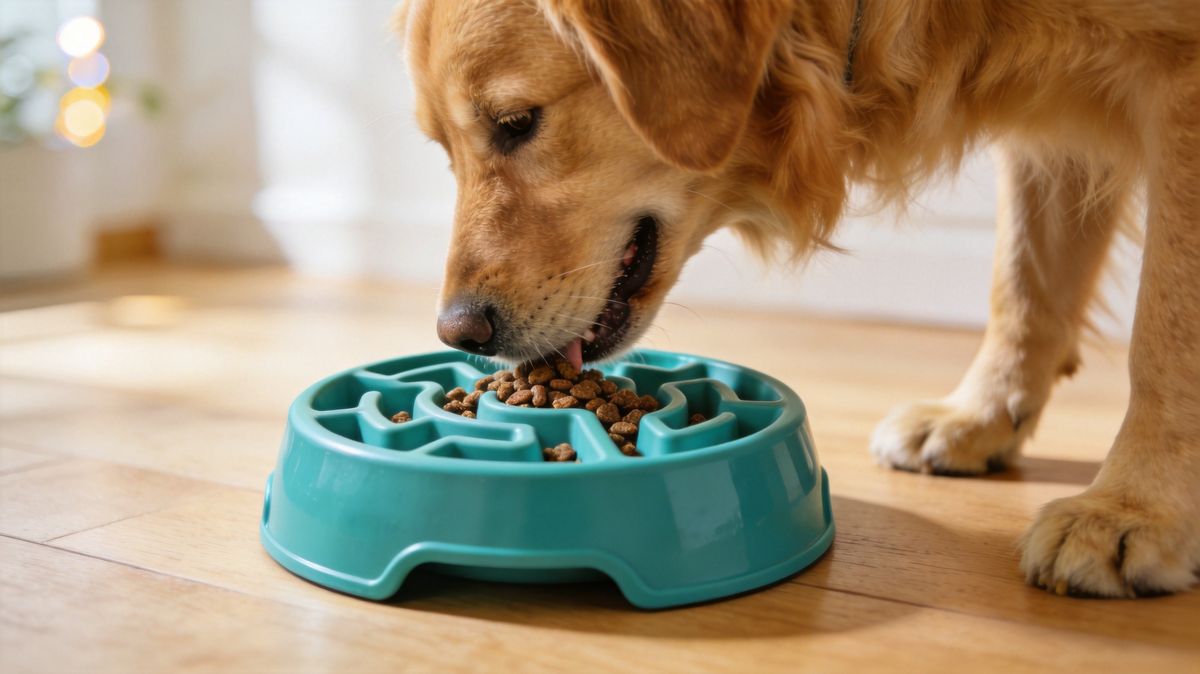
Slow feeder bowls use physical obstacles built into the bowl's interior to force dogs to work around them while eating. Instead of being able to grab mouthful after mouthful directly from an open surface, your dog must navigate ridges, mazes, domes, and compartments to reach their food.
The core principle is simple: every bite requires effort. Your dog must use their tongue or nose to nudge kibble around barriers, lift it out of crevices, or chase it across patterned ridges. These micro-movements naturally slow consumption without restricting the amount of food your dog receives.
Common obstacle patterns include:
- Raised ridges or fins: Vertical or radial barriers that break the bowl surface into narrow channels
- Maze patterns: Interconnected winding paths that kibble must travel through
- Central domes: A raised center that forces food to spread around the perimeter
- Nodule clusters: Rounded bumps that scatter kibble into individual pieces
The most effective designs balance challenge with accessibility — difficult enough to slow eating, but not so frustrating that your dog gives up entirely.
Benefits of Slow Feeding
Switching to a slow feeder offers advantages that go well beyond simply extending mealtime.
Longer Mealtimes, Better Digestion
A slow feeder can stretch a five-minute meal to fifteen or twenty minutes. This gives the digestive system time to produce enzymes, process food gradually, and send fullness signals to the brain. Many owners report less gas, less regurgitation, and firmer stools after making the switch.
Mental Stimulation
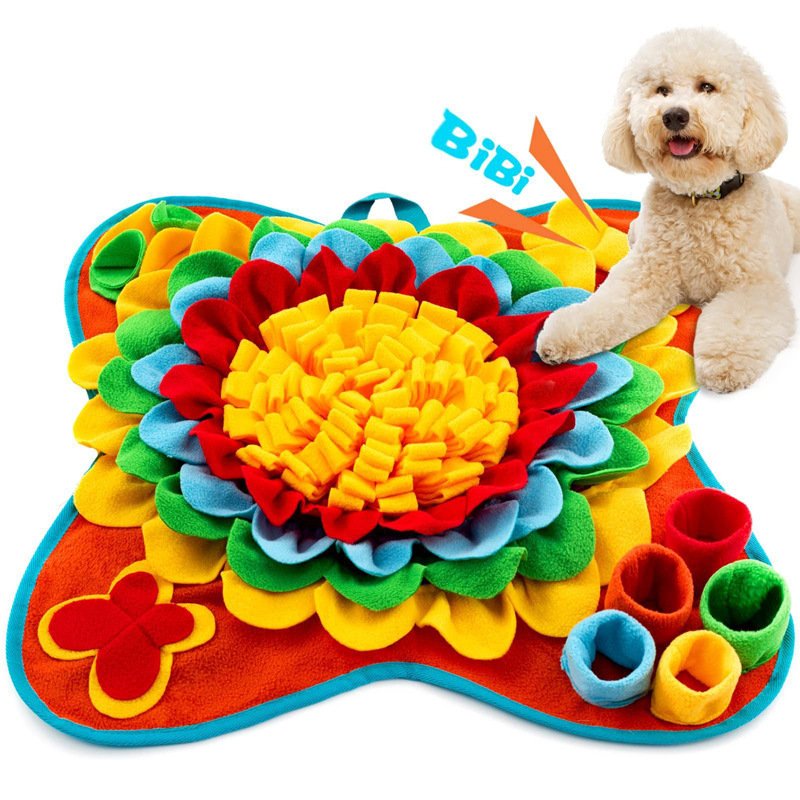
Working for food engages a dog's problem-solving abilities. The maze-like patterns turn a boring bowl of kibble into a mini puzzle, providing mental enrichment that's especially valuable on rainy days or for dogs who spend time alone. Mental engagement tires dogs out in a way that physical exercise alone can't always achieve. For additional mental enrichment, consider pairing mealtime with a snuffle mat.
Reduced Mealtime Anxiety
When food is consumed slowly and the bowl is designed to make every piece a small reward, the frantic energy around mealtime tends to fade. Dogs learn that food isn't going to disappear, and they settle into a calmer, more natural eating rhythm. This is particularly beneficial in multi-dog households where bowl-guarding and competitive eating are concerns.
Portion Control and Healthy Weight
Because slow feeders give satiety signals time to kick in, dogs feel satisfied with their regular portion instead of begging for more. This makes it easier to maintain a consistent feeding routine and a healthy body condition without constantly increasing portions.
Better for Dental Health
The licking, nibbling, and maneuvering required to extract kibble from tight spaces provides mild mechanical cleaning for teeth and gums. While not a replacement for regular brushing, it's a helpful supplement that reduces plaque buildup over time.
Choosing the Right Slow Feeder Bowl
Not all slow feeders are the same. The right choice depends on your dog's size, age, eating style, and any physical considerations. Here's how the three main types compare.
Maze Slow Feeder Bowl: The Everyday Choice
The classic maze bowl features raised ridges in a winding pattern across the bowl floor. Kibble gets caught in the channels, and your dog must use their tongue or nose to push each piece out.
Best for: Most dogs, especially medium-sized adults who are moderate gulpers. Maze bowls are also ideal for senior dogs because the wide, shallow design doesn't require reaching into deep crevices.
What to look for: Food-grade, BPA-free construction, dishwasher-safe materials, and a non-slip base to keep the bowl from sliding across the floor. A bowl made from durable melamine is resistant to scratches (which can harbor bacteria) and stands up to daily use.
LoyalBond's Maze Slow Feeder Dog Bowl features a raised ridge maze pattern in a wide, shallow shape that's easy for older dogs to navigate. The food-grade melamine is BPA-free and dishwasher safe, and the non-slip base keeps the bowl steady even during enthusiastic meals. At $11.99, it's an accessible starting point for owners new to slow feeding.
Anti-Choke Slow Feeder Bowl: Maximum Slowing Power
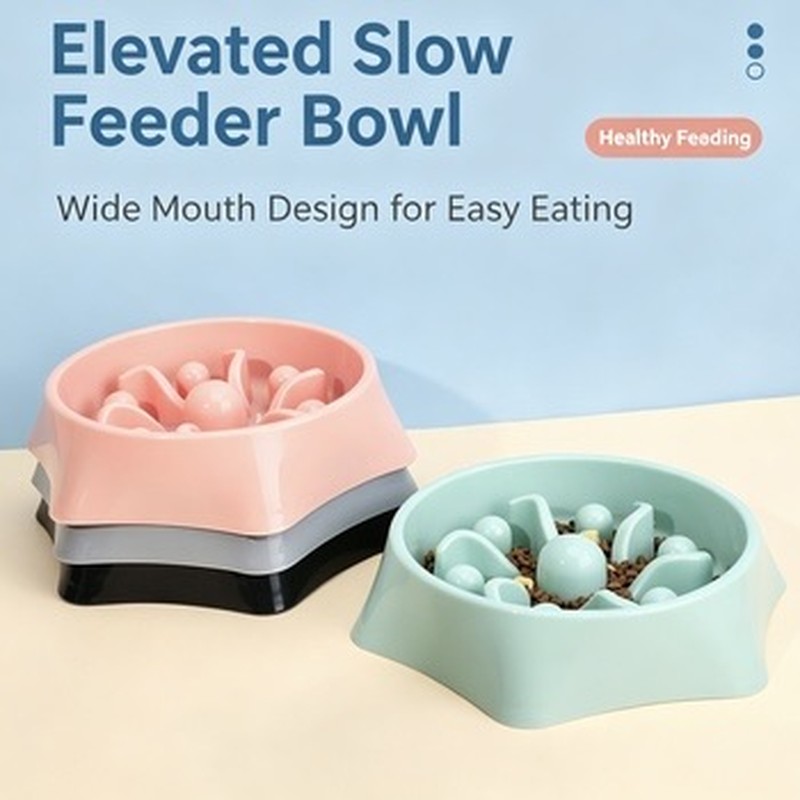
For dogs who inhale their food — the ones who finish before you've even put the bag away — a more aggressive obstacle design makes sense. Anti-choke bowls combine a central raised dome with radial fins and rounded nodules to create a multi-level barrier that significantly restricts how much food your dog can grab at once.
Best for: Severe gulpers, small to medium dogs, and cats who also eat too quickly. The central dome prevents the "big bite" strategy by forcing food outward into narrow channels between the fins.
What to look for: A wide base for stability, high walls to contain kibble, BPA-free plastic, and a design that's still easy to clean. Stackable models are convenient for multi-pet households. The bowl should extend mealtime to around 15-20 minutes — long enough for digestion to keep pace, but not so long that your dog becomes frustrated.
LoyalBond's Anti-Choke Slow Feeder Bowl uses a central dome, radial fin barriers, and rounded nodule maze to extend eating time from roughly five minutes to around twenty. The wide-mouth, high-wall design (4.5cm deep) contains food effectively, and the star-shaped non-slip base keeps the bowl anchored. BPA-free plastic, stackable construction, and five color options (Pink, Teal, Mint Green, Grey, Black) make it a practical and attractive choice for small to medium dogs and cats, priced at $9.99.
Elevated Neck-Protection Slow Feeder Bowl: Comfort and Posture
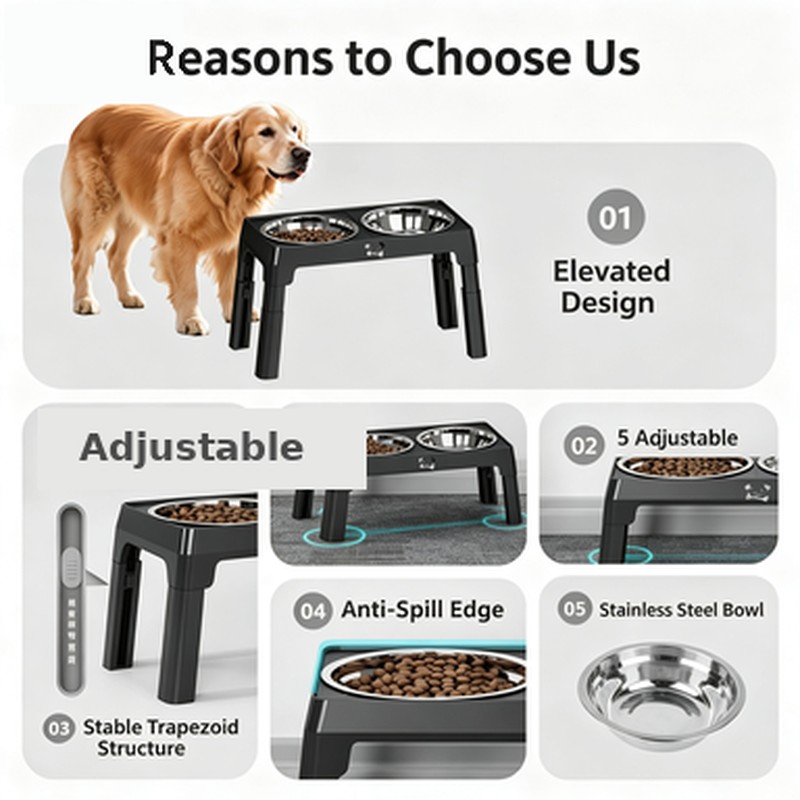
An elevated slow feeder combines a raised stand with a maze-patterned bowl, bringing the food to a more natural height. When a dog eats from a floor-level bowl, they must lower their neck significantly — a position that can be uncomfortable over time, especially for older dogs or breeds with long backs.
Best for: Senior dogs, large breeds, dogs with limited neck mobility, and any owner who wants to combine slow feeding with ergonomic comfort. The raised position also helps reduce the amount of air swallowed during meals because the esophagus aligns more naturally with the stomach.
What to look for: A sturdy stand with non-slip feet, a removable bowl for easy cleaning, and tool-free assembly. Stainless steel bowls are the gold standard for hygiene — they're non-porous, resistant to bacteria, and dishwasher safe.
LoyalBond's Elevated Neck-Protection Slow Feeder Bowl pairs an elevated stand with a 304 stainless steel bowl featuring maze ridge patterns. The ergonomic height reduces neck strain during meals, non-slip foot pads keep the stand stable, and the no-tool assembly makes setup quick and easy. At $21.99, it's a premium option for owners who want both slow-feeding benefits and feeding comfort for their dog.
Quick Comparison
- Maze bowl ($11.99): Wide, shallow, dishwasher-safe melamine — best for seniors and moderate gulpers
- Anti-choke bowl ($9.99): Central dome plus fins and nodules for maximum slowing — best for fast eaters and multi-pet homes
- Elevated bowl ($21.99): Raised stand with stainless steel — best for neck comfort and premium hygiene
Tips for Introducing a Slow Feeder
Some dogs take to a slow feeder immediately, while others need a gradual transition. Here's how to set your dog up for success.
Start with Familiar Food
Use your dog's regular kibble for the first few meals. Don't switch foods simultaneously — that introduces too many variables at once. You want your dog to focus on the new bowl, not unfamiliar flavors.
Make It Easy at First
For the first meal, spread a thin layer of kibble across the top of the obstacles without pressing it into the crevices. This lets your dog experience success and understand that food comes from the bowl. Gradually push food deeper into the maze over subsequent meals as confidence builds.
Keep Meals Positive
Stay nearby for the first few uses and offer gentle praise. If your dog seems frustrated, don't intervene immediately — give them a chance to problem-solve. But if they walk away or seem stressed, simplify the setup and try again later.
Don't Remove the Old Bowl Cold Turkey
For hesitant dogs, alternate between the regular bowl and the slow feeder for the first week. This reduces anxiety and lets your dog adjust at their own pace. Most dogs fully transition within 7-10 days.
Monitor Portion Sizes
Slow feeders don't change how much food your dog needs — they change how quickly they eat it. Keep portions consistent with your regular feeding guidelines, and avoid adding extra food because the meal takes longer.
Supervise Initially
Watch the first few meals to make sure your dog isn't chewing on the bowl itself or trying to flip it. A non-slip base helps, but some determined dogs may still try to tip the bowl. If flipping is a concern, place the bowl on a rubber mat or in a stand.
Cleaning and Maintenance
A clean bowl is essential for your dog's wellbeing. Slow feeders have more crevices than regular bowls, so proper cleaning matters.
Daily Rinse
After every meal, rinse the bowl with warm water to remove saliva and loose food particles. Even if you plan to do a deeper clean later, a quick rinse prevents food from drying and hardening in the maze crevices.
Regular Washing
Wash the bowl thoroughly with mild dish soap and warm water at least once a day, or after every meal if possible. Most slow feeder bowls are dishwasher safe — place them on the top rack for best results. Check the manufacturer's guidelines to confirm.
For bowls with deep or narrow channels, use a small bottle brush to dislodge trapped food. This is especially important for plastic bowls, where tiny scratches can harbor bacteria over time.
Material-Specific Tips
- Plastic bowls: Replace them if you notice deep scratches, discoloration, or a lingering odor. Plastic is more prone to bacterial buildup in scratched surfaces.
- Melamine bowls: Highly durable and scratch-resistant. Dishwasher safe and easy to sanitize. Avoid abrasive scouring pads that can dull the finish.
- Stainless steel bowls: The most hygienic option. Non-porous, dishwasher safe, and resistant to bacteria. Inspect regularly for dents or rough spots.
Inspect Regularly
Check the bowl weekly for signs of wear — cracks, loose parts, or damaged non-slip bases. A compromised bowl is harder to clean and may not provide the same slowing effect. Most quality slow feeders last for years with proper care.
Conclusion
If your dog eats like every meal is their last, a slow feeder bowl is one of the most impactful changes you can make. By extending mealtime through intelligent obstacle design, these bowls support healthy digestion, reduce the risk of choking and discomfort, provide mental stimulation, and help your dog maintain a natural eating pace.
Whether you choose a straightforward maze bowl for everyday use, an anti-choke design for the speediest eaters, or an elevated bowl that combines slow feeding with neck comfort, the key is finding a design that matches your dog's size, age, and eating style.
At LoyalBond, we offer three slow feeder options to suit different needs and budgets:
- The Maze Slow Feeder Dog Bowl ($11.99) for seniors and moderate gulpers
- The Anti-Choke Slow Feeder Bowl ($9.99) for fast eaters and multi-pet homes
- The Elevated Neck-Protection Slow Feeder Bowl ($21.99) for ergonomic feeding comfort
Every bowl uses pet-safe, BPA-free materials and is designed with non-slip stability. Explore our full Feeding Aids Collection to find the right match for your dog — because every meal should be enjoyed, not inhaled.